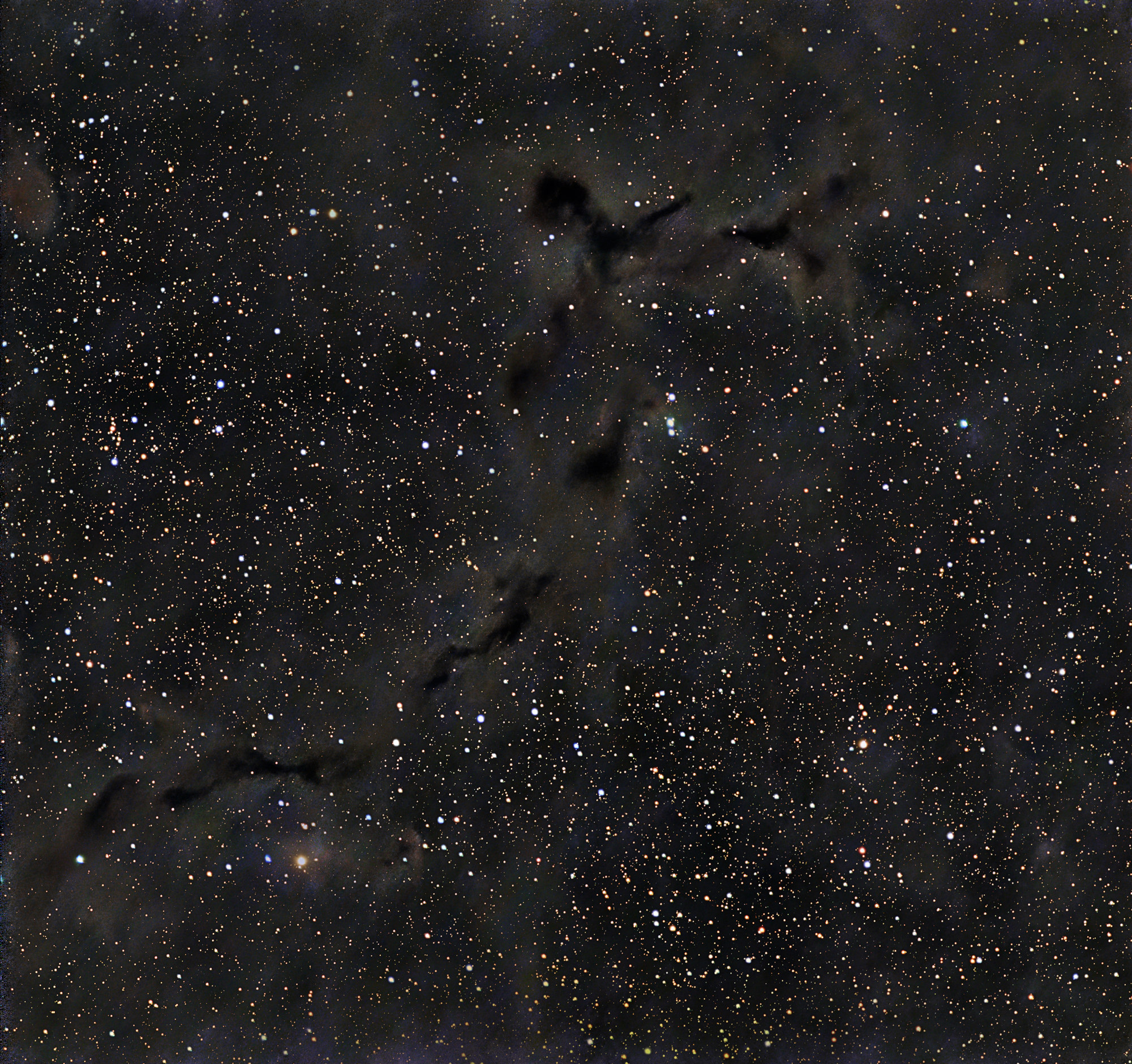
Reflection- and Dark Nebulae
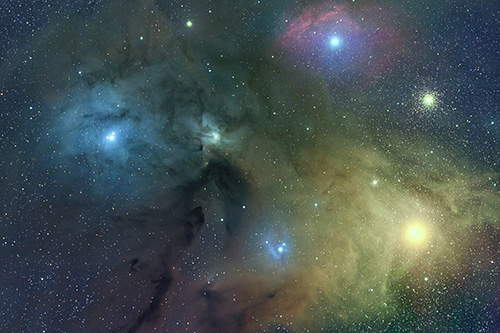
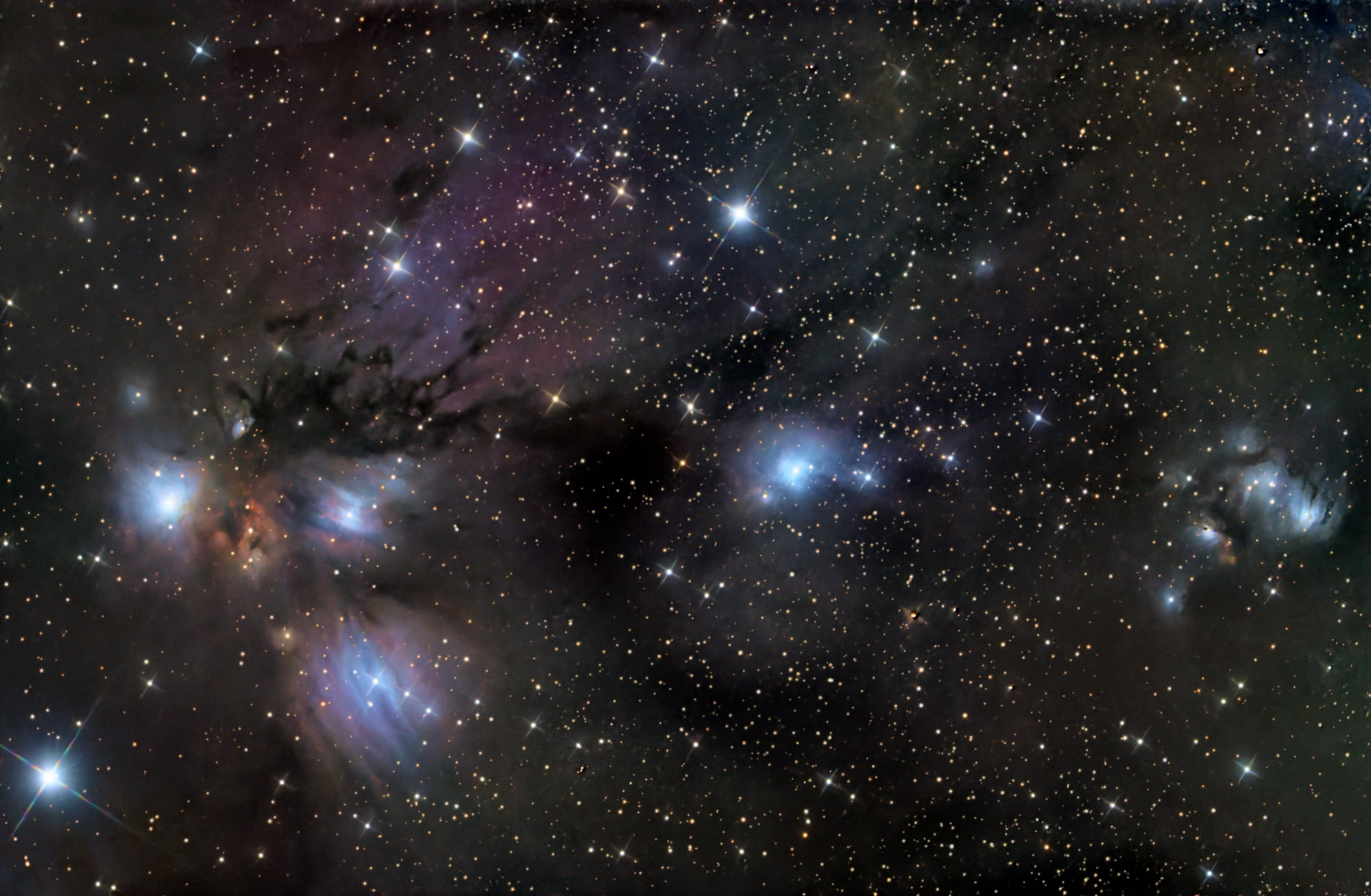
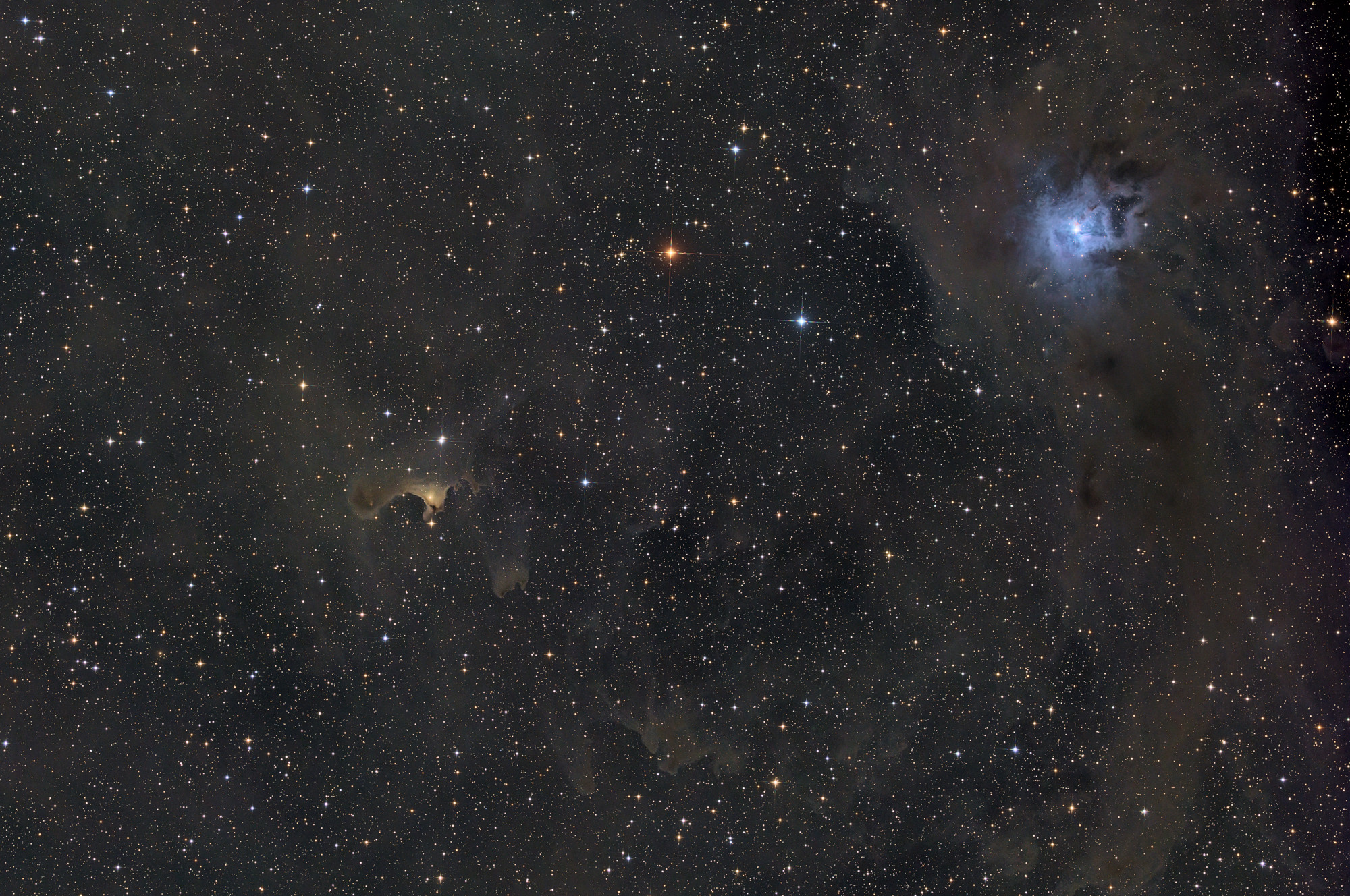
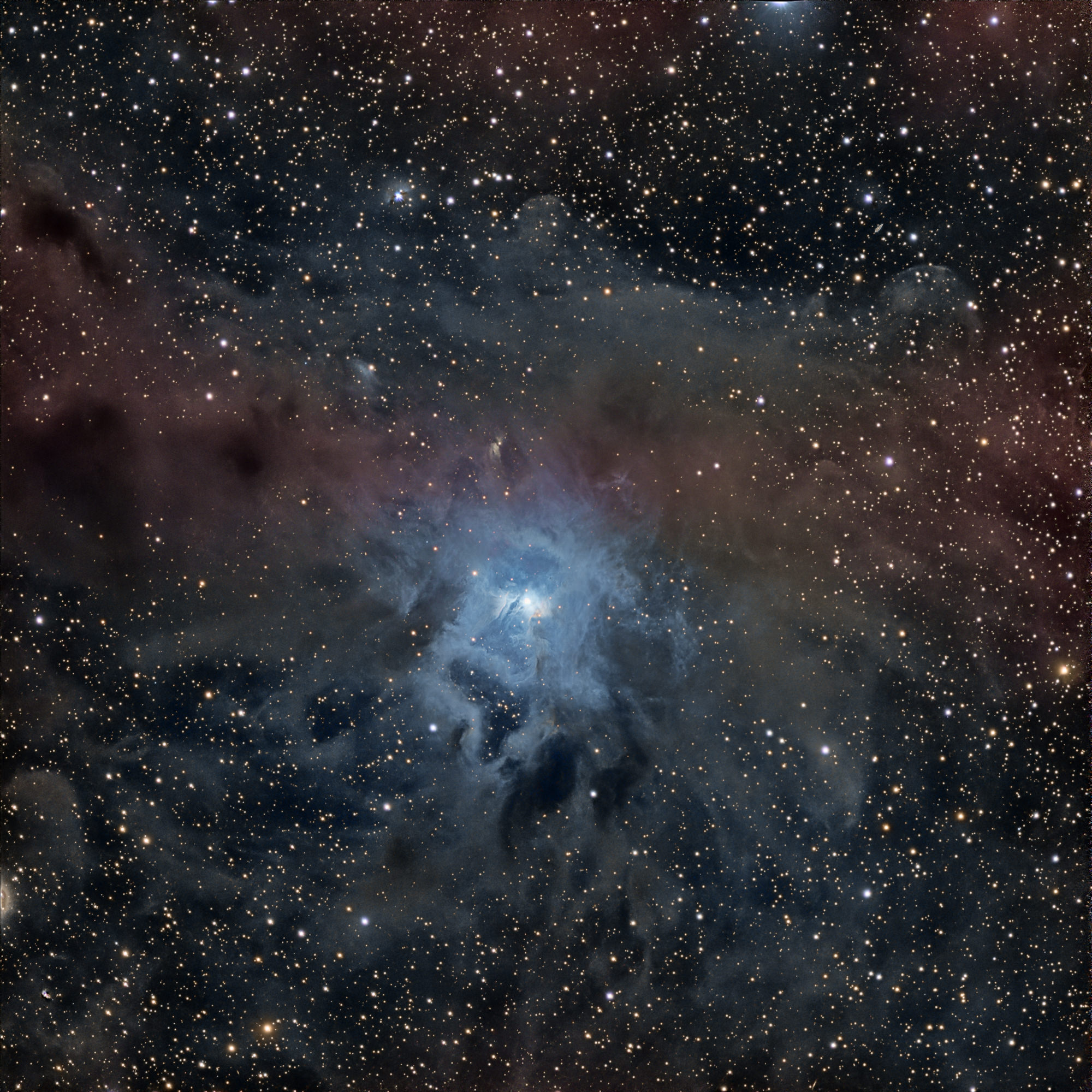
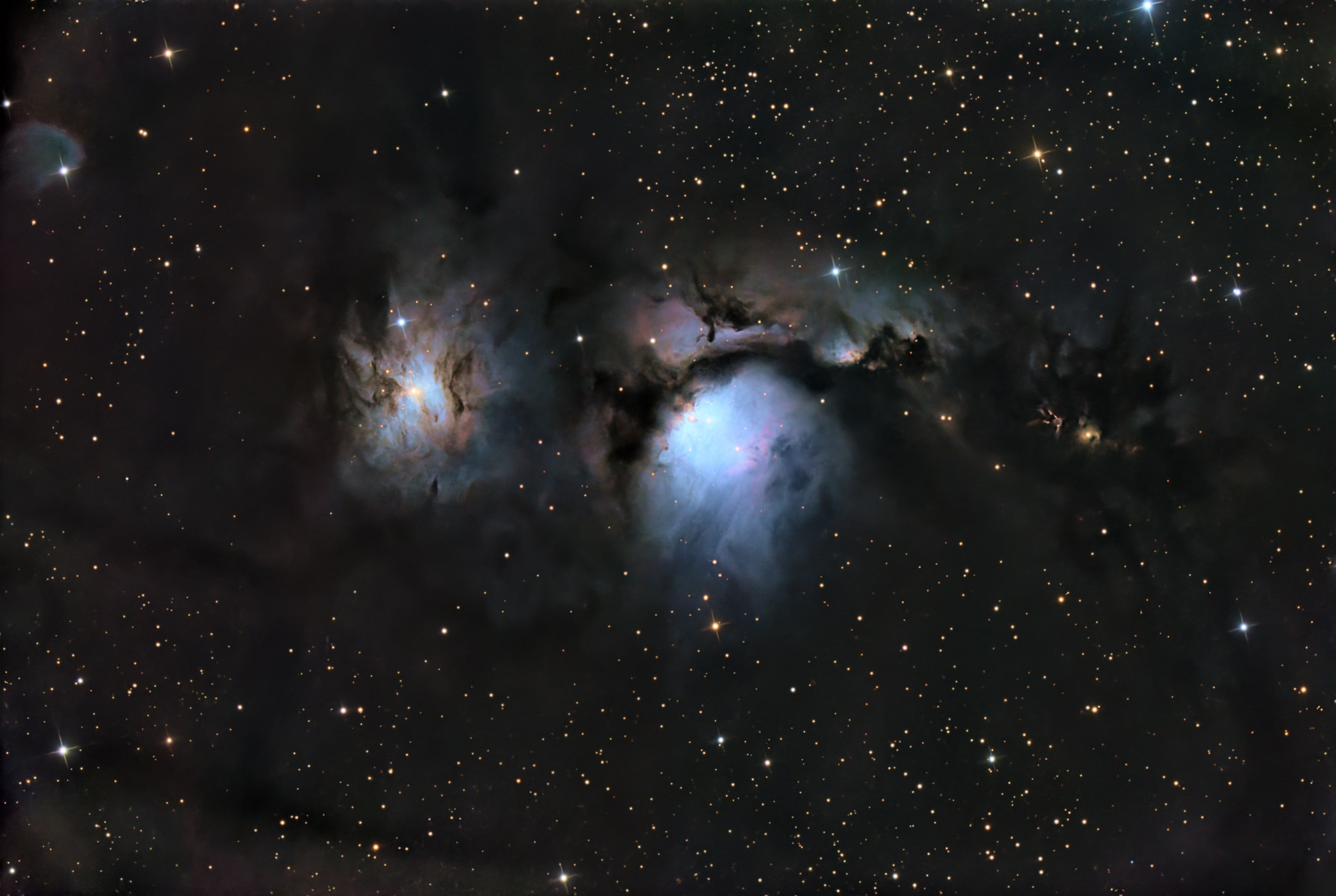
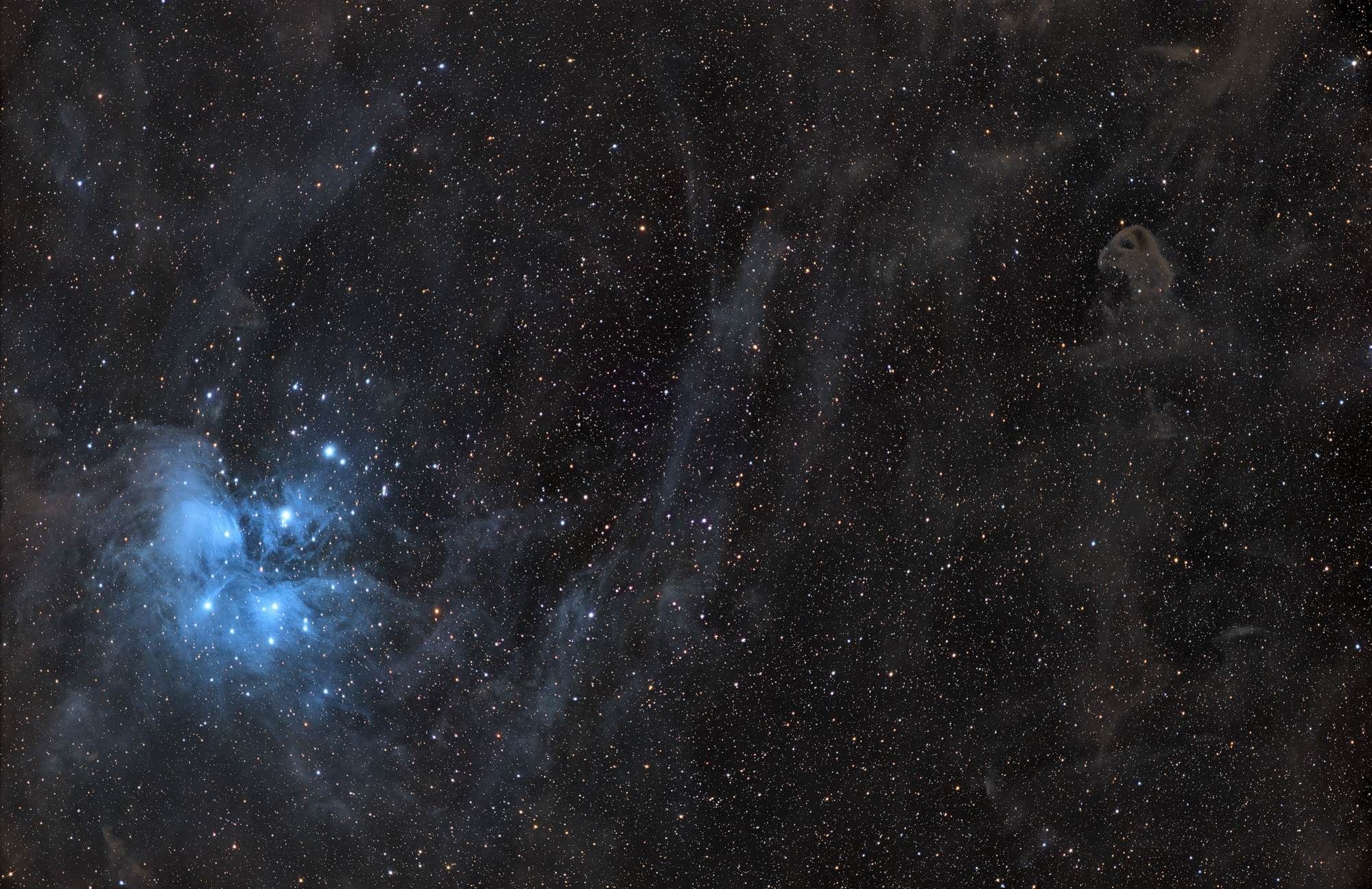
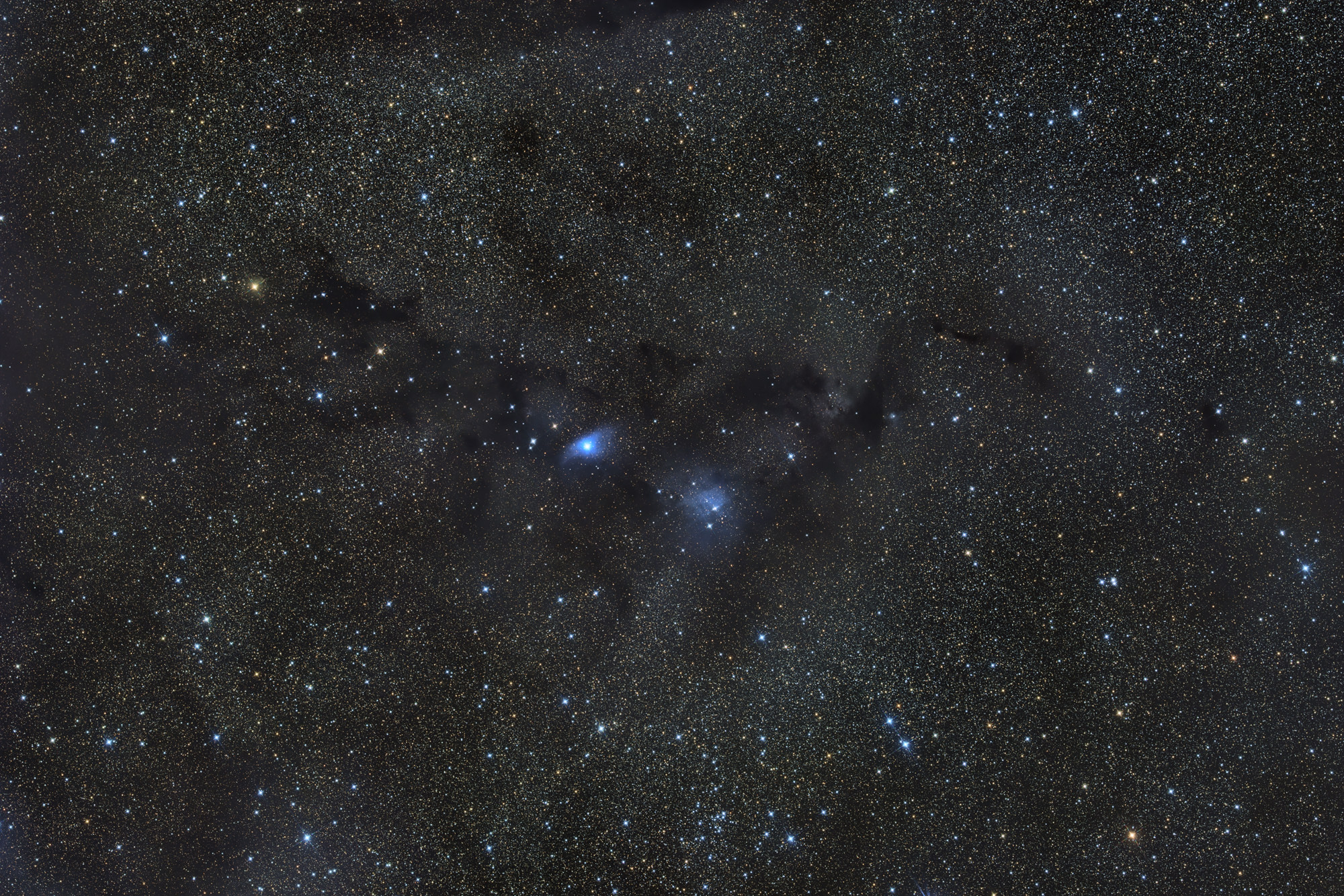
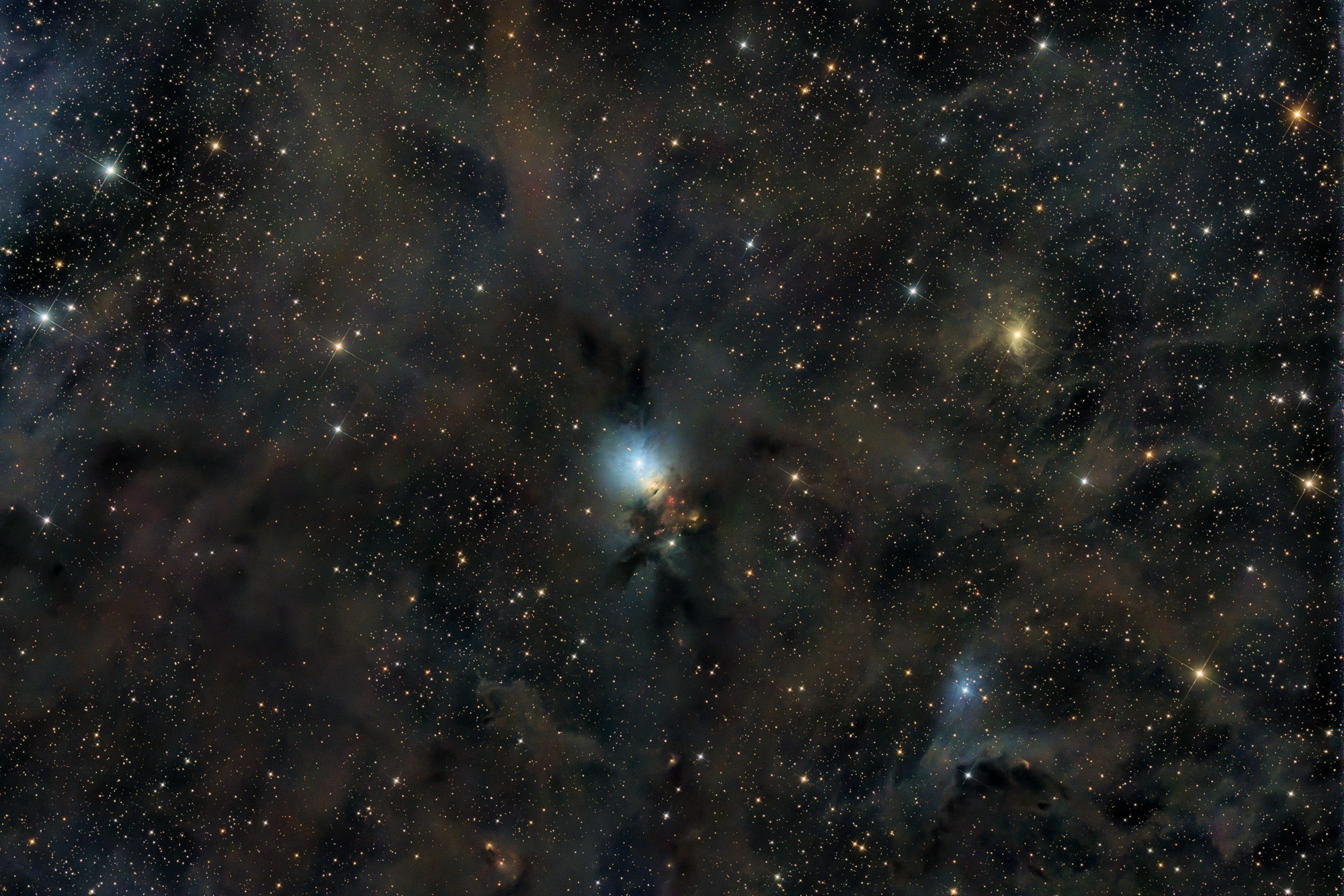
Reflection nebulae are interstellar clouds of gas and dust that do not emit light themselves but instead reflect and scatter the light from nearby or embedded stars.
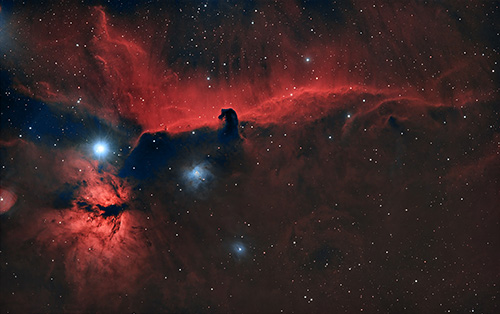
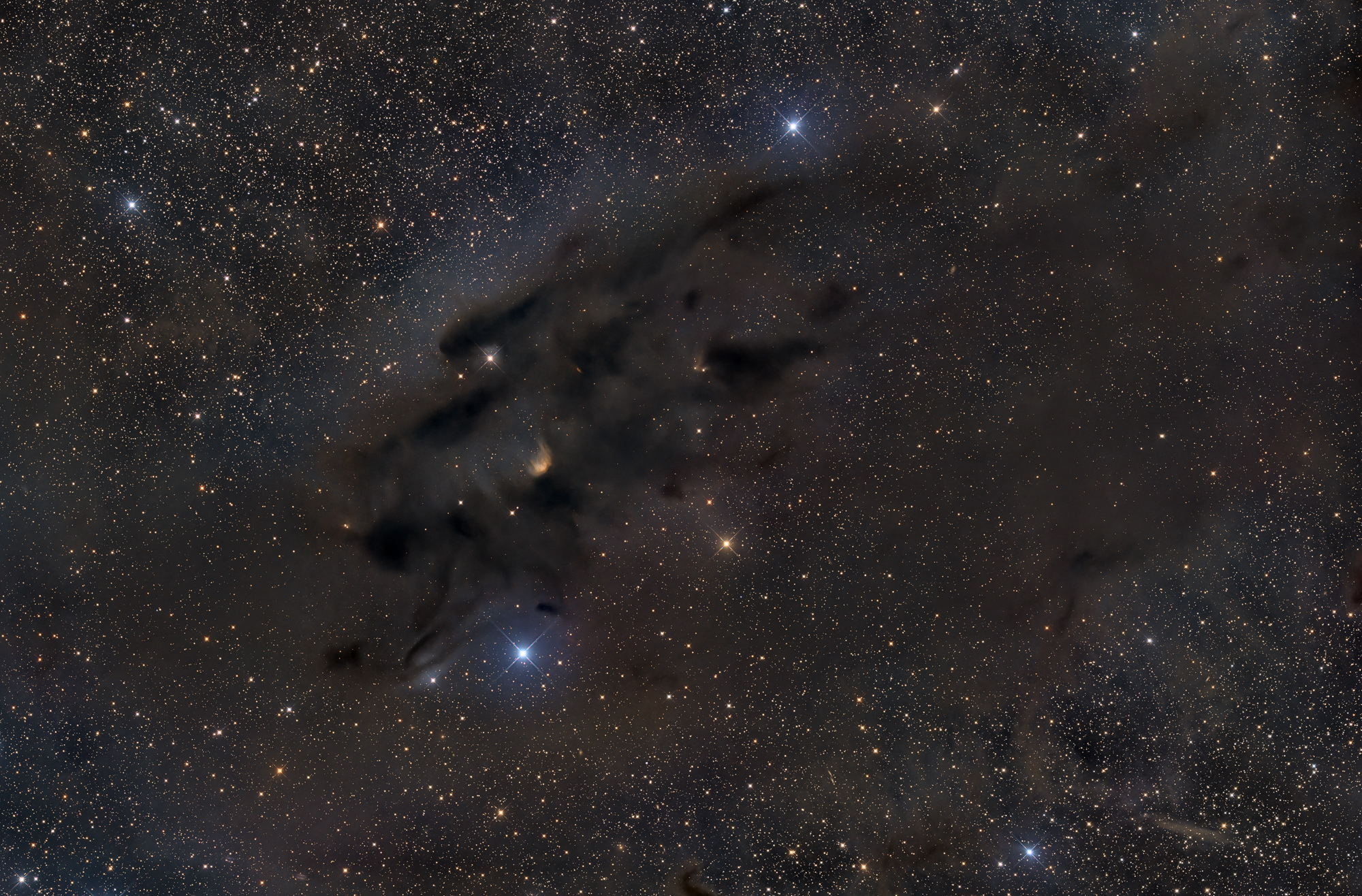
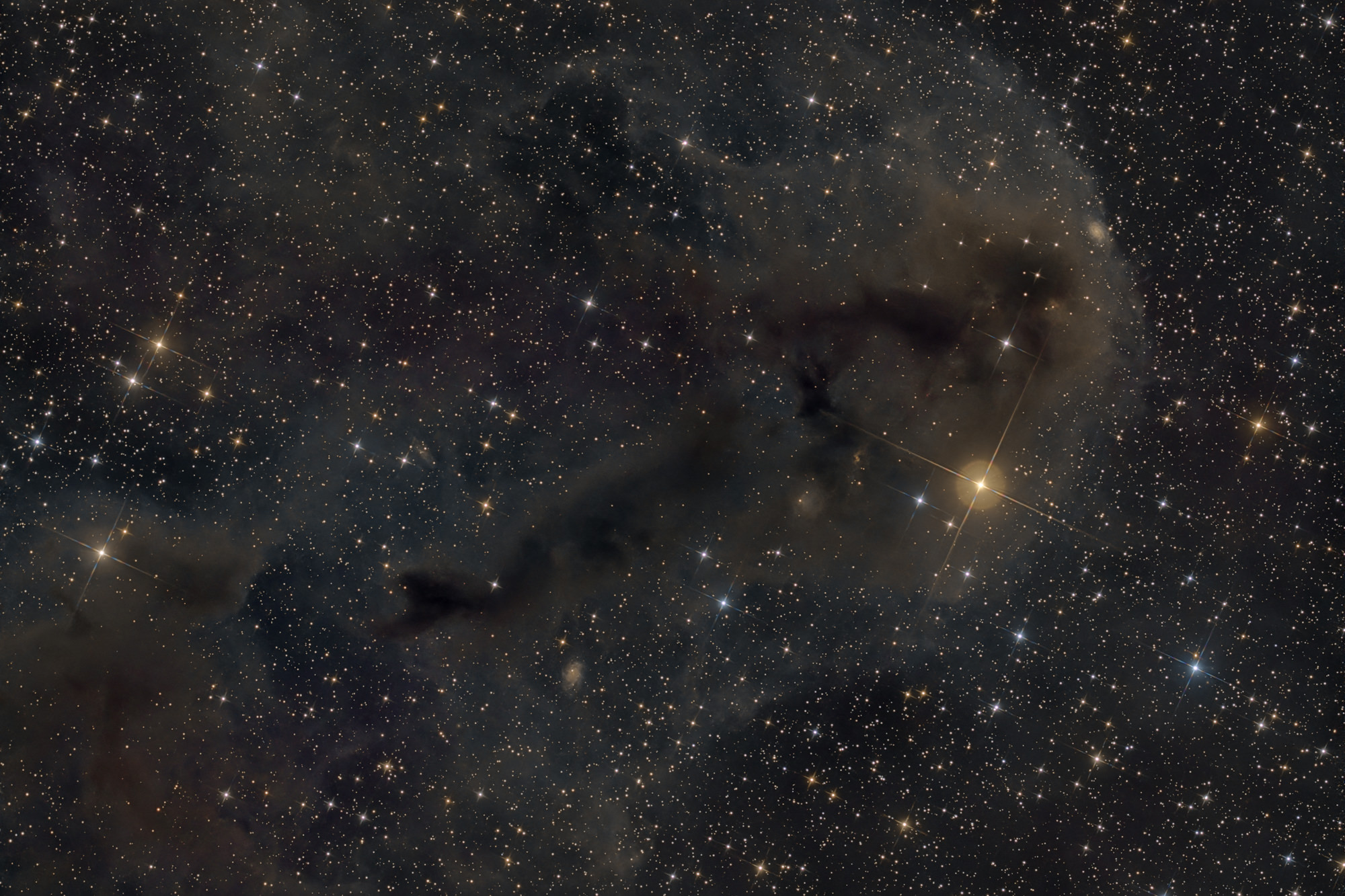
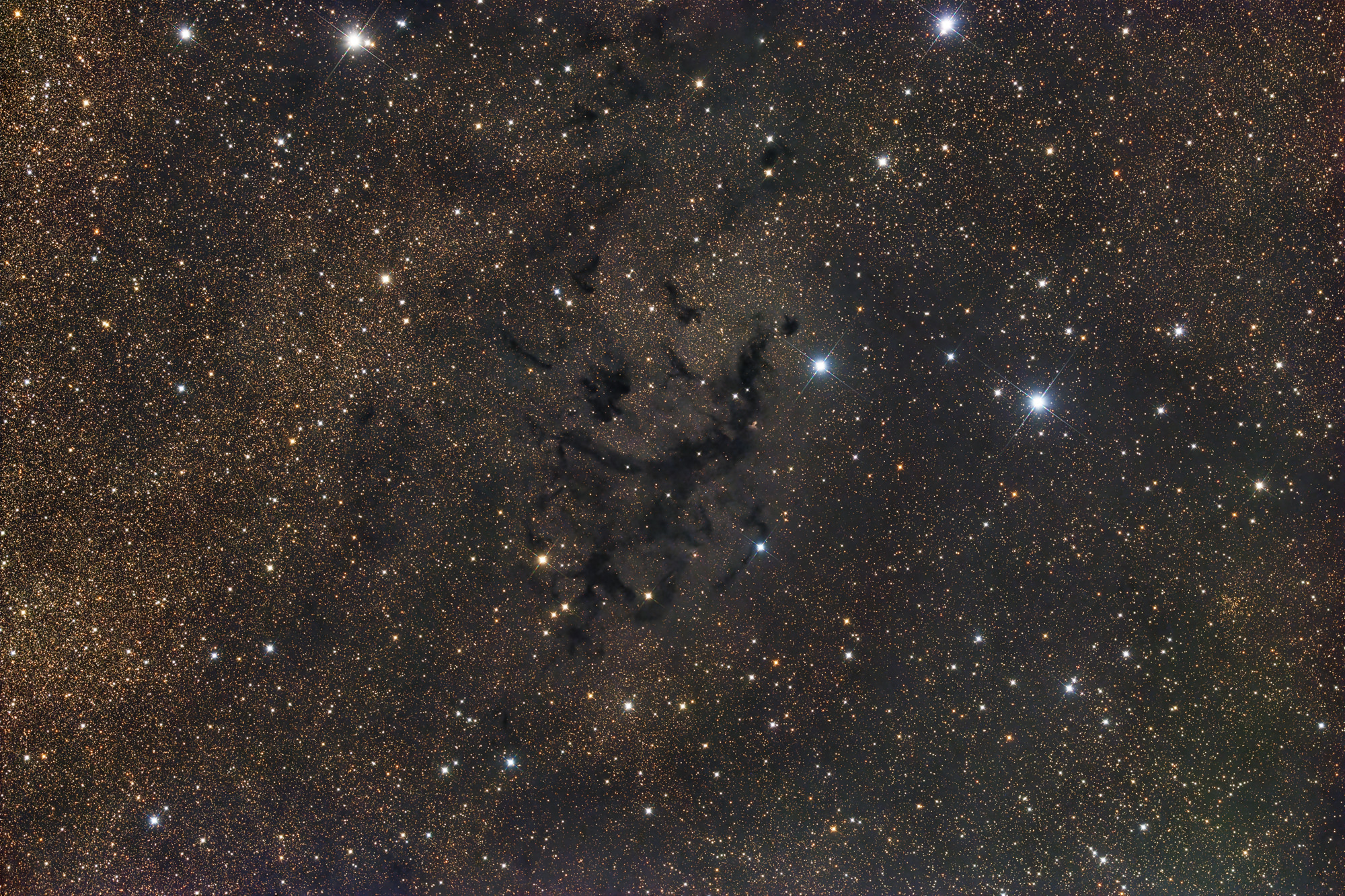
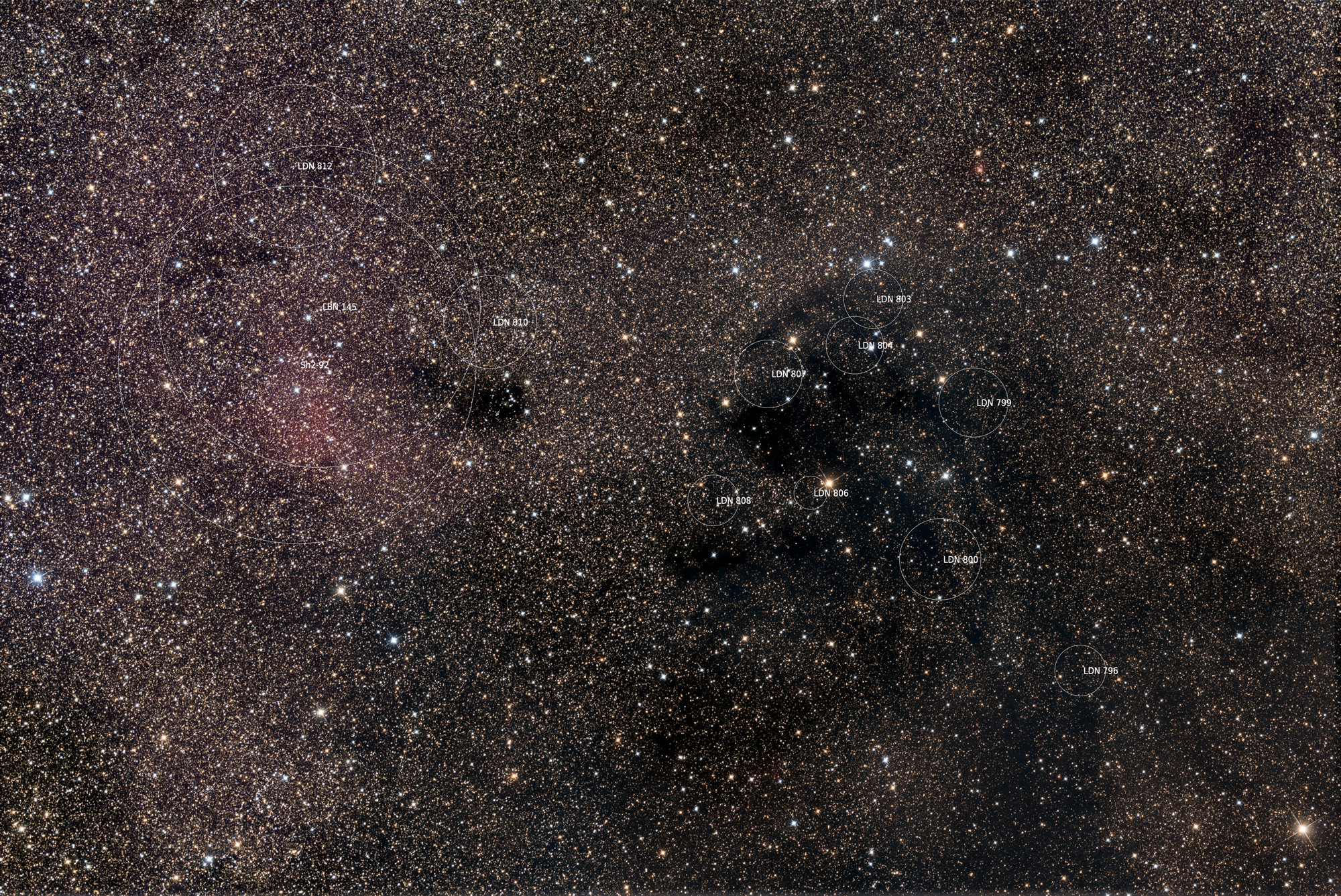
Dark nebulae are vast clouds of interstellar matter that obscure or completely block out the light from objects lying behind them. They contain so much matter that they stand out as dark silhouettes against a bright background.
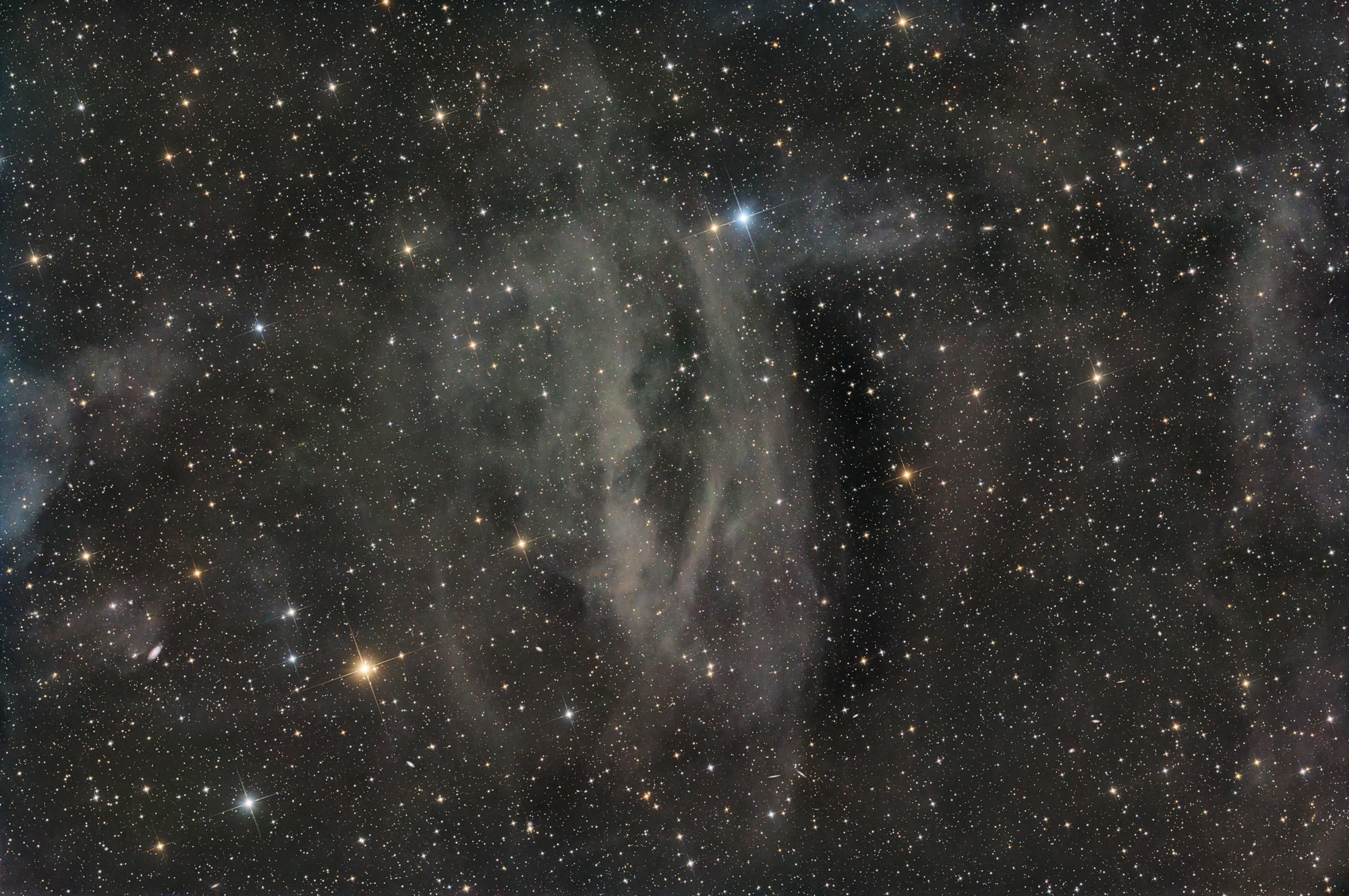
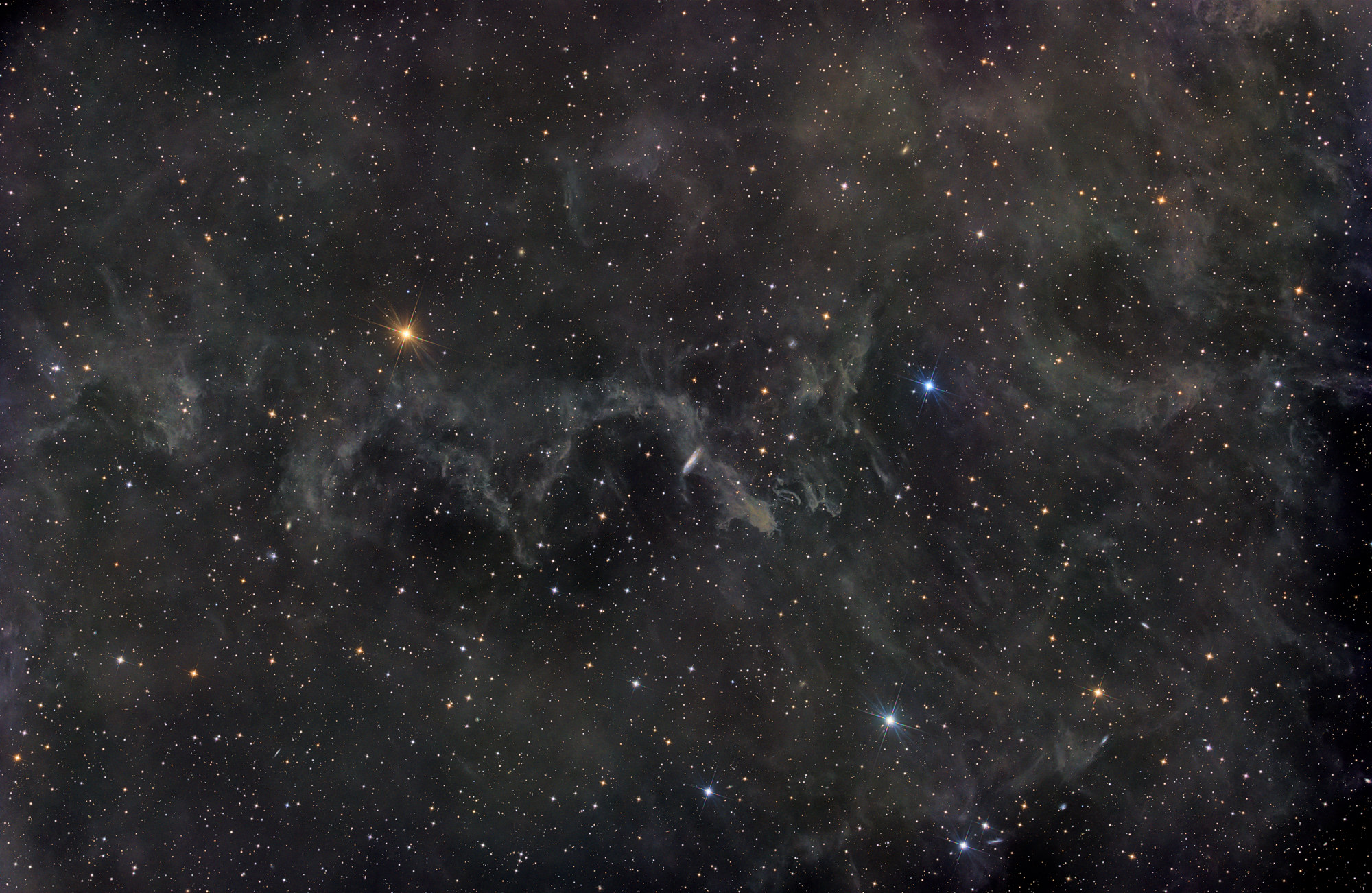
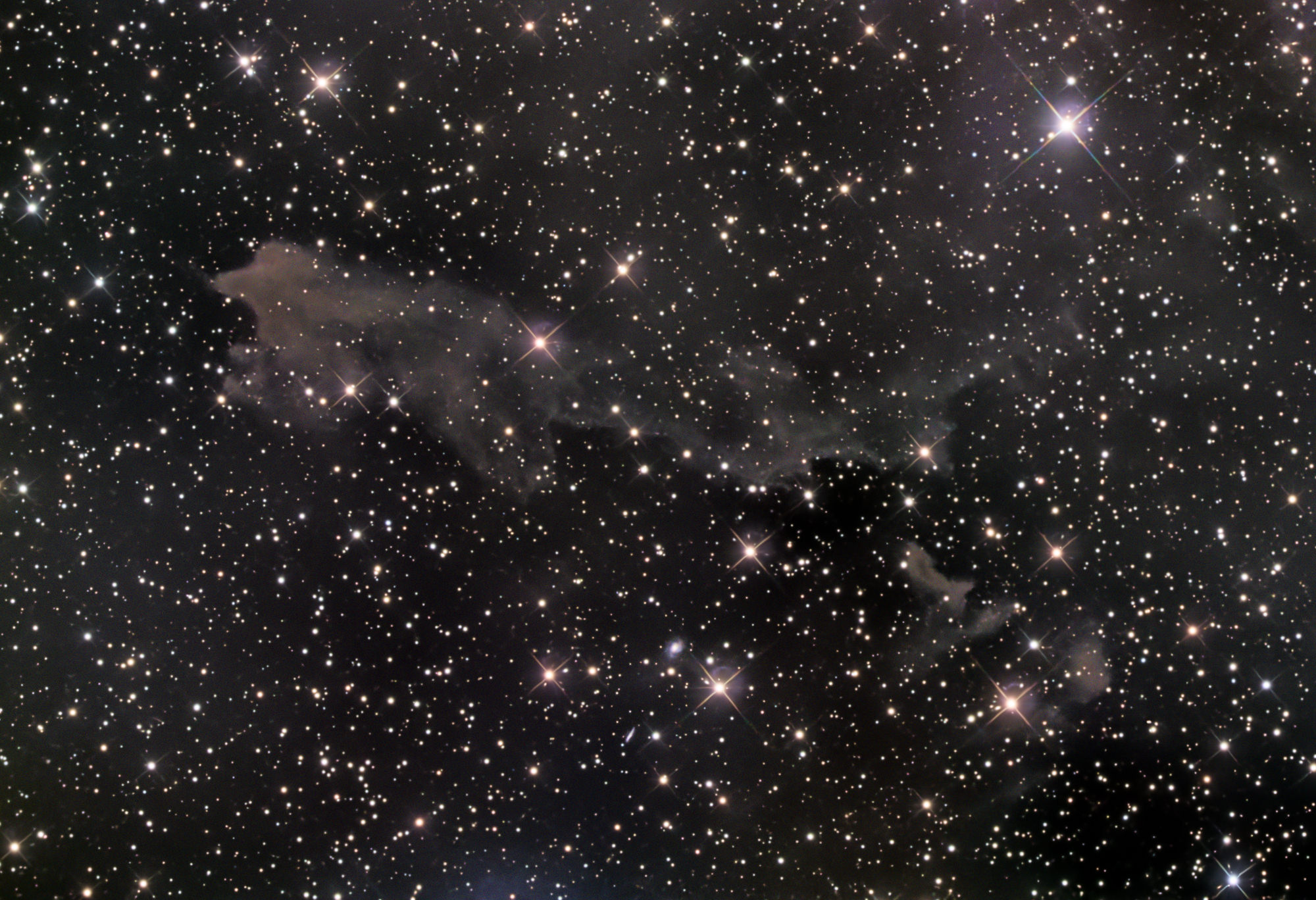
Galactic cirrus reflects the interstellar dust of the Milky Way and appears as delicate, usually gray veils.
Reflection Nebulae
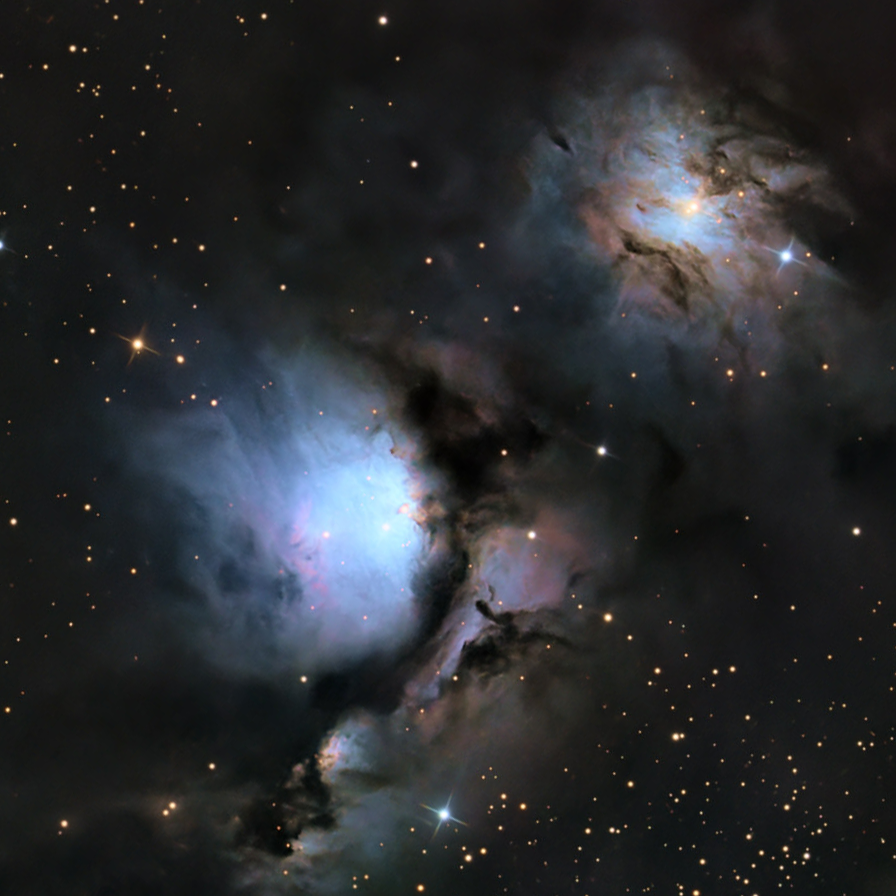
Reflection nebulae are interstellar clouds of gas and dust that do not emit light themselves but instead reflect and scatter the light of nearby stars.
The fine dust particles scatter the star's short-wavelength blue light far more strongly than the longer-wavelength red light. This is the same effect that makes our sky on Earth appear blue during the day.
Key Characteristics
- Composed mainly of fine dust particles (similar to soot or silicate dust).
- Not hot enough to emit light on their own.
- Often appear bluish, as shorter wavelengths are scattered more efficiently.
- Extremely cold, only a few tens of Kelvin above absolute zero.
Dark Nebulae and Galactic Cirrus
Dark Nebulae
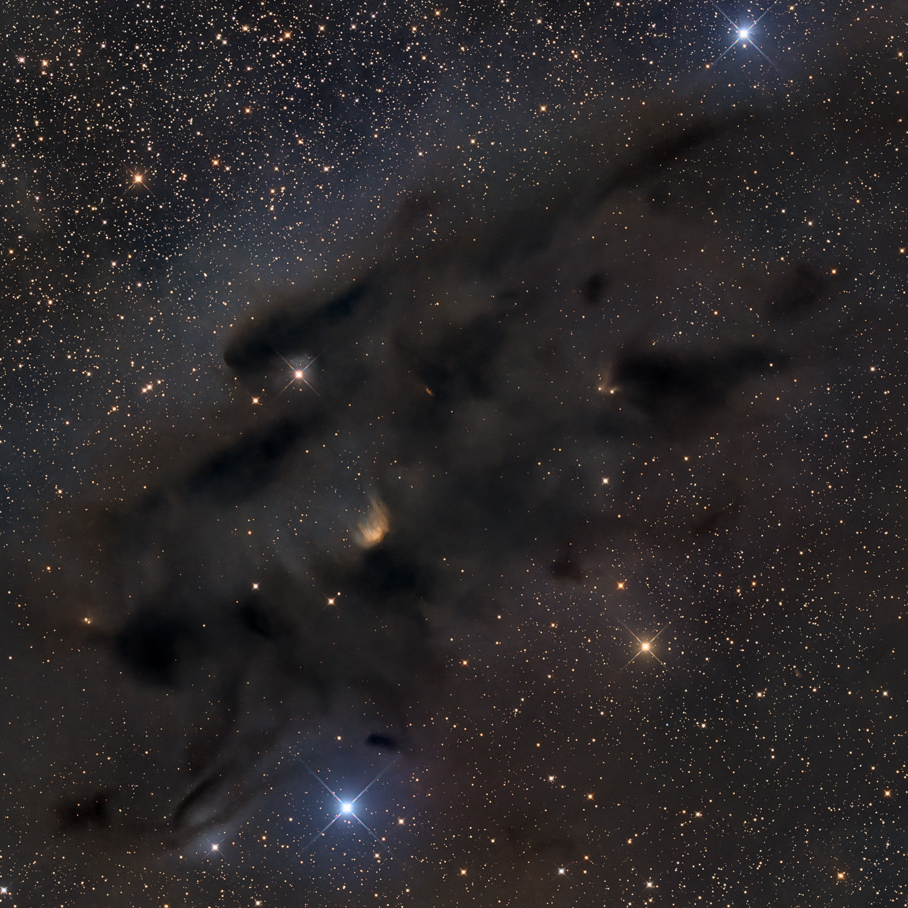
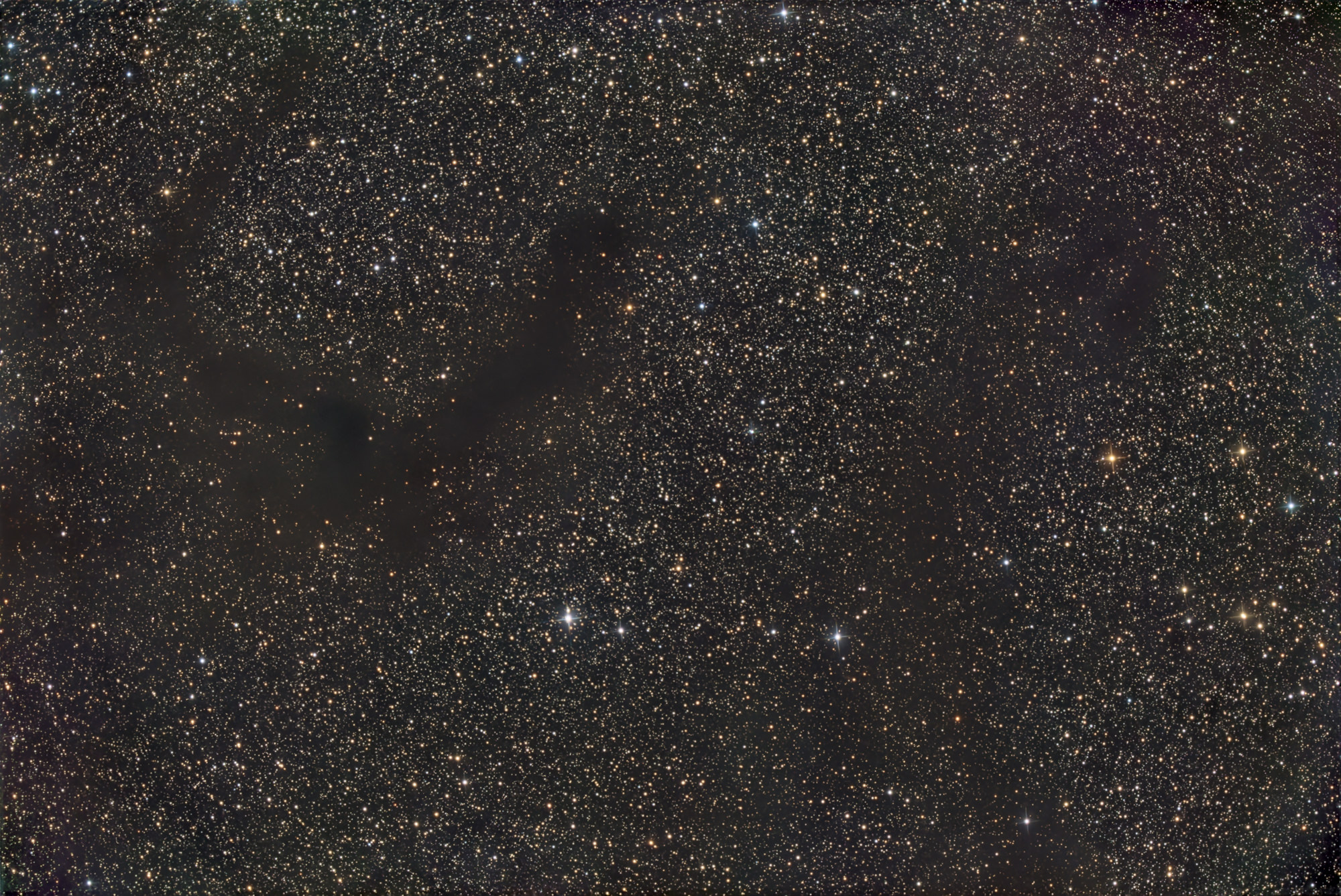
Dark nebulae, also known as dark clouds, are too far away from neighboring stars to reflect their light or be stimulated to glow themselves. As dark clouds of gas and cosmic dust, they obscure the light from stars and other luminous nebulae situated behind them, thereby becoming visible themselves. If the matter within these nebulae becomes increasingly compressed, they become the birthplaces of new stars.
Characteristics
- Primarily composed of cold molecular hydrogen (H₂) and dust
- Very low temperatures (~10–20 Kelvin)
- Do not emit visible light — they block it
- Often serve as stellar nurseries where new stars and planetary systems are born
Galactic Cirrus
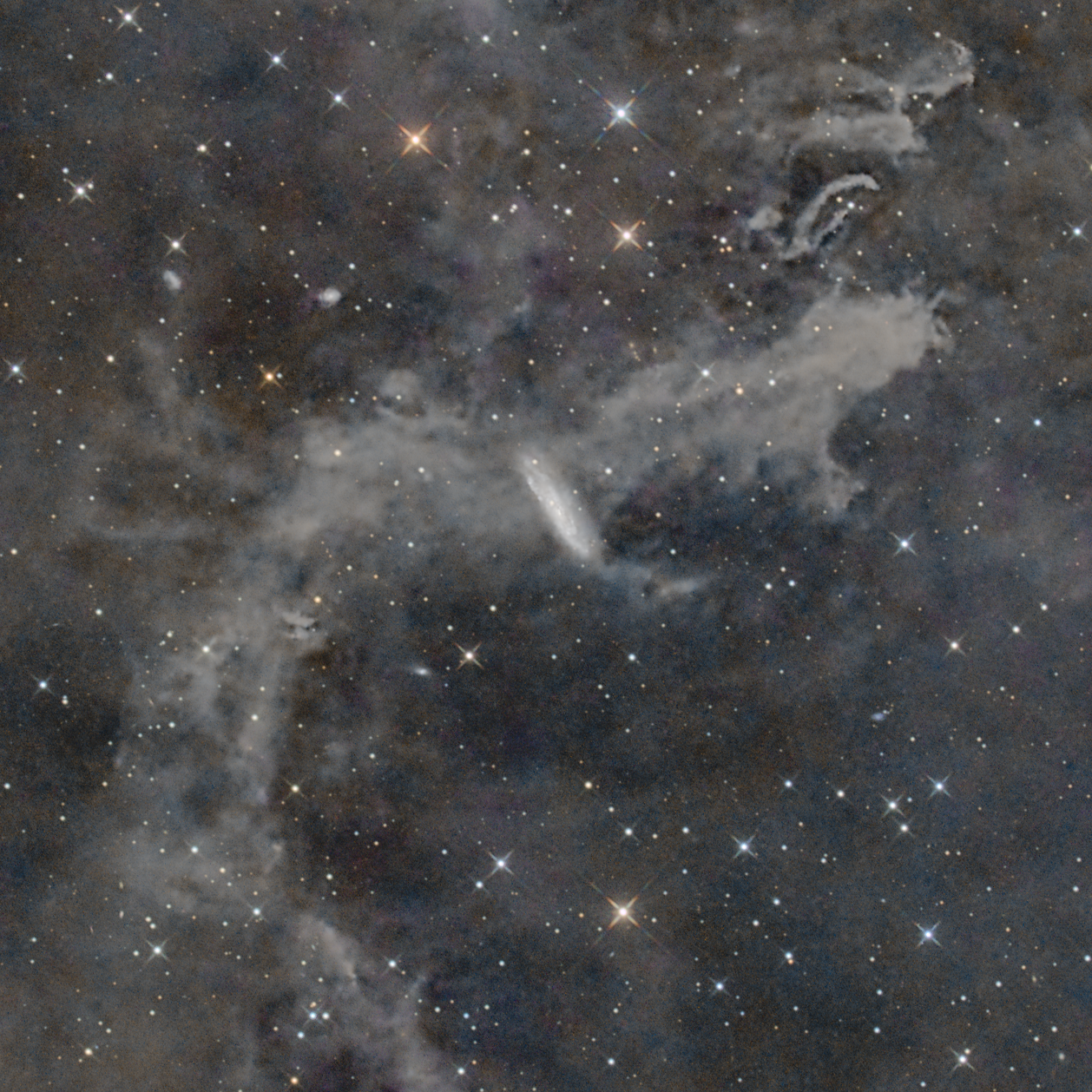
Galactic cirrus (frequently referred to as the Integrated Flux Nebula or IFN) are vast, faint cosmic dust clouds. They float far outside the flat disk of our Milky Way. Unlike classical reflection nebulae, which are illuminated by individual bright stars, these cirrus clouds glow from the faint, diffuse light of the entire Milky Way galaxy.
Visually, the delicate, filamentary structures resemble their earthly namesakes—cirrus or feather clouds. They consist primarily of interstellar dust that absorbs ultraviolet radiation and converts it into a faint, reddish glow.These structures were first discovered in the 1960s and 1970s, notably through photographic plates taken at the Palomar Observatory.
Comparison of astronomical nebulae
- Reflection nebulae → scatter light (bluish)
- Emission nebulae → glow on their own (reddish)
- Dark nebulae → block light
- Galactic cirrus → reflect the diffuse light of the entire Milky Way
Explore More Astronomical Objects